Progressive technology ultraviolet lightning UV Boosting
Key facts:
- The Habánské sklepy winery, part of the BOHEMIA SEKT Group, is the first in the Czech Republic to test the French UV Boosting technology, which strengthens grapevines' natural defences using UV-C light without any chemicals.
- The trial covers 20 hectares of vineyards near Mikulov, South Moravia, planted with Pinot Gris, Pinot Noir, Grüner Veltliner and Welschriesling.
- Results from around 100 producers abroad (2018–2022) show a 45 % average drop in powdery and downy mildew, 20–30 % lower frost damage and a 20 % average yield increase.
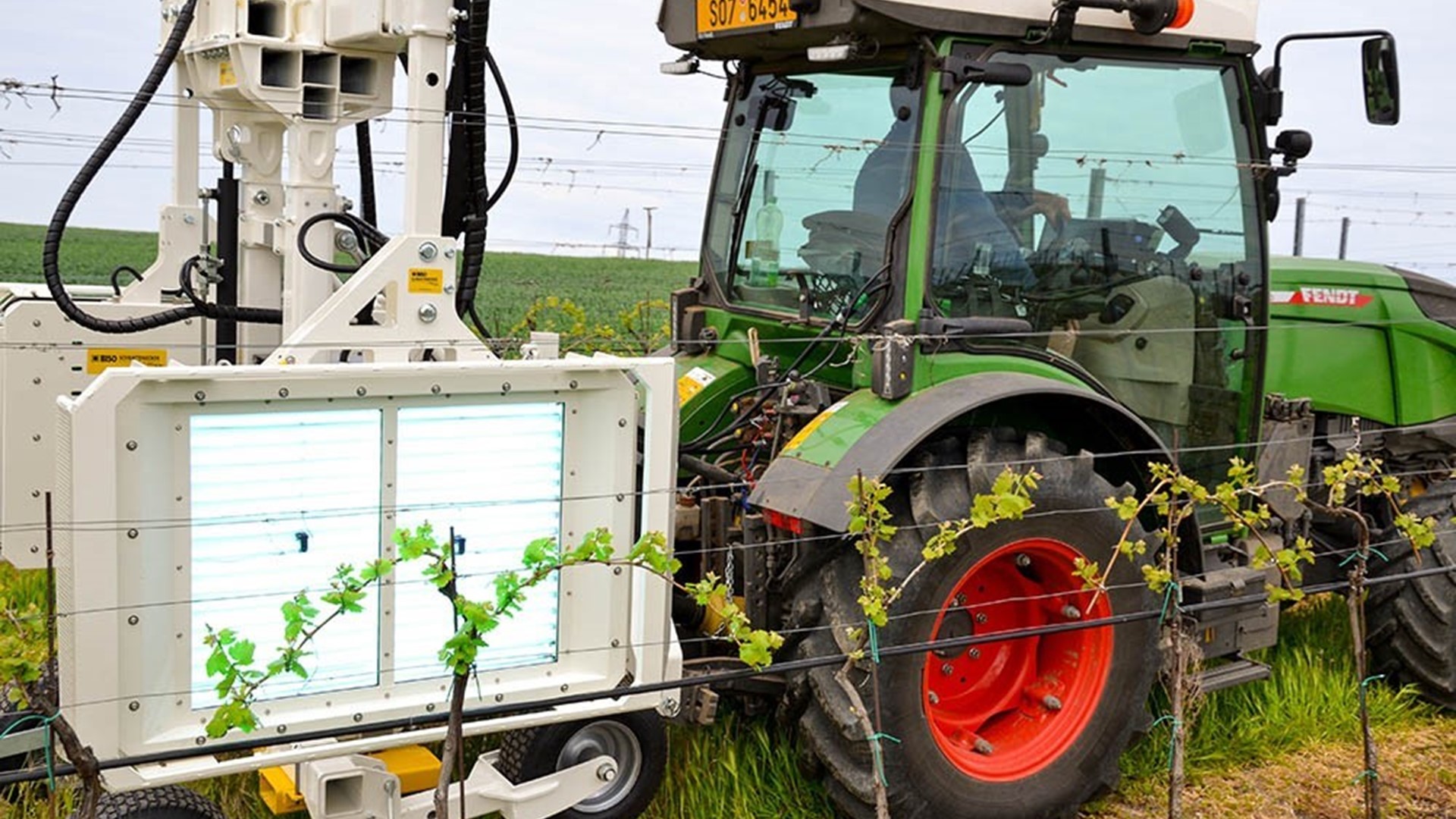
Velké Bílovice, 22 May 2023 – We are testing a new approach to vineyard care. The first trial of a pioneering technology based on UV-C ultraviolet radiation, developed by a team of students and professors at the University of Avignon in the south of France, took place in the second half of May in vineyards near Mikulov.
There are many risks that threaten grapevines and stand between winegrowers and a successful harvest – from drought and heat, through vine diseases, to frost. Moravian winemakers may soon be better equipped to deal with these impacts of climate change thanks to the French UV Boosting technology. "The device strengthens the plants' natural defences without the use of any chemicals. It works with special lamps emitting ultraviolet rays in the UV-C spectrum, which trigger the production of salicylic acid in the plants. This acts as a warning signal, priming the plant in advance for a faster and more effective defence against disease, frost and drought," explained Václav Štursa of BISO SCHRATTENECKER, the supplier of the technology.
To date, the technology has been successfully used by around one hundred producers in France, Italy, Spain and Chile. Their results from 2018 to 2022 show that with UV Boosting, the incidence of powdery mildew and downy mildew fell by an average of 45 %, while frost damage decreased by 20 to 30 %. Vineyard yields, on the other hand, rose by an average of 20 %.
In the Czech Republic, the device is being tested for the first time by the Habánské sklepy winery, part of the BOHEMIA SEKT. "We will be testing whether the plants' resistance to drought and disease improves, and whether this approach can increase vineyard yields. For this purpose, we have set aside 20 hectares of vineyards planted with Pinot Gris, Pinot Noir, Grüner Veltliner and Welschriesling – varieties whose grapes are used to produce Bohemia Sekt Prestige and the Habánské sklepy sparkling wines. If the technology performs in our conditions as well as it has abroad, it could pave the way to a further reduction in the use of plant protection products in our vineyards," said Petr Ptáček, Viticulture Director of the BOHEMIA SEKT. The treatment will be applied six times a year, roughly every two weeks, and the first test results will be known at the end of this year's growing season.
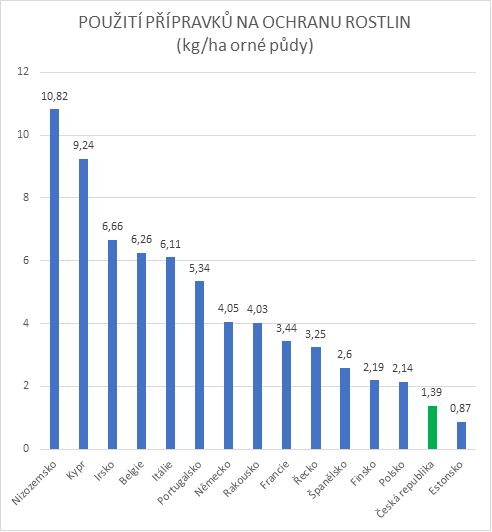
The device leaves no residue on the plants and works equally well in both organic and conventional growing systems, where it can help reduce the use of plant protection products. The volume of such products used in Czech agriculture is already among the lowest in the EU. According to data from the Ministry of Agriculture, a Belgian farmer, for example, uses four times more products per hectare of arable land than a Czech farmer. The Czech Republic also ranks below Italy, Portugal, Spain, France, Germany, Austria, the United Kingdom, Finland and Ireland.
A Trend Towards More Sustainable Farming
The use of UV Boosting is one of many BOHEMIA SEKT initiatives supporting the development of sustainable vineyard care. "We focus on gentle care for the soil and the landscape through our own DoVinic.cz programme, which is aimed primarily at combating the impacts of climate change, especially drought," said Ptáček, Viticulture Director of the BOHEMIA SEKT.
In recent years, the company has, for example, cut the number of machinery passes through its vineyards by up to half. To protect the environment in the Pálava Protected Landscape Area, it uses a recycling sprayer that recovers spray liquid which does not adhere to the vine leaves; after filtration, the liquid is reused for further treatment. The company also operates its own network of weather stations that measure temperature, rainfall and humidity at different heights of the plant as well as in the soil, enabling more efficient irrigation.
Chart: USE OF PLANT PROTECTION PRODUCTS in 2020¹