The planting of PIWI vineyards has started in Moravia
Key facts:
- BOHEMIA SEKT, one of the Czech Republic's leading grape growers, has planted 11 new hectares of resilient PIWI varieties in 2023 on its "Nad Nesytem" and "Kotel" vineyard sites in Sedlec, in the Mikulov wine sub-region of South Moravia.
- PIWI varieties are naturally resistant to frost and diseases such as powdery mildew, downy mildew and grey mould, requiring fewer plant protection products.
- Alongside the planting, the company has launched a trial of "collective plant immunity", alternating blocks of PIWI and classic European varieties to test whether disease resistance can be transferred. The harvest will be used mainly for sparkling wine production.
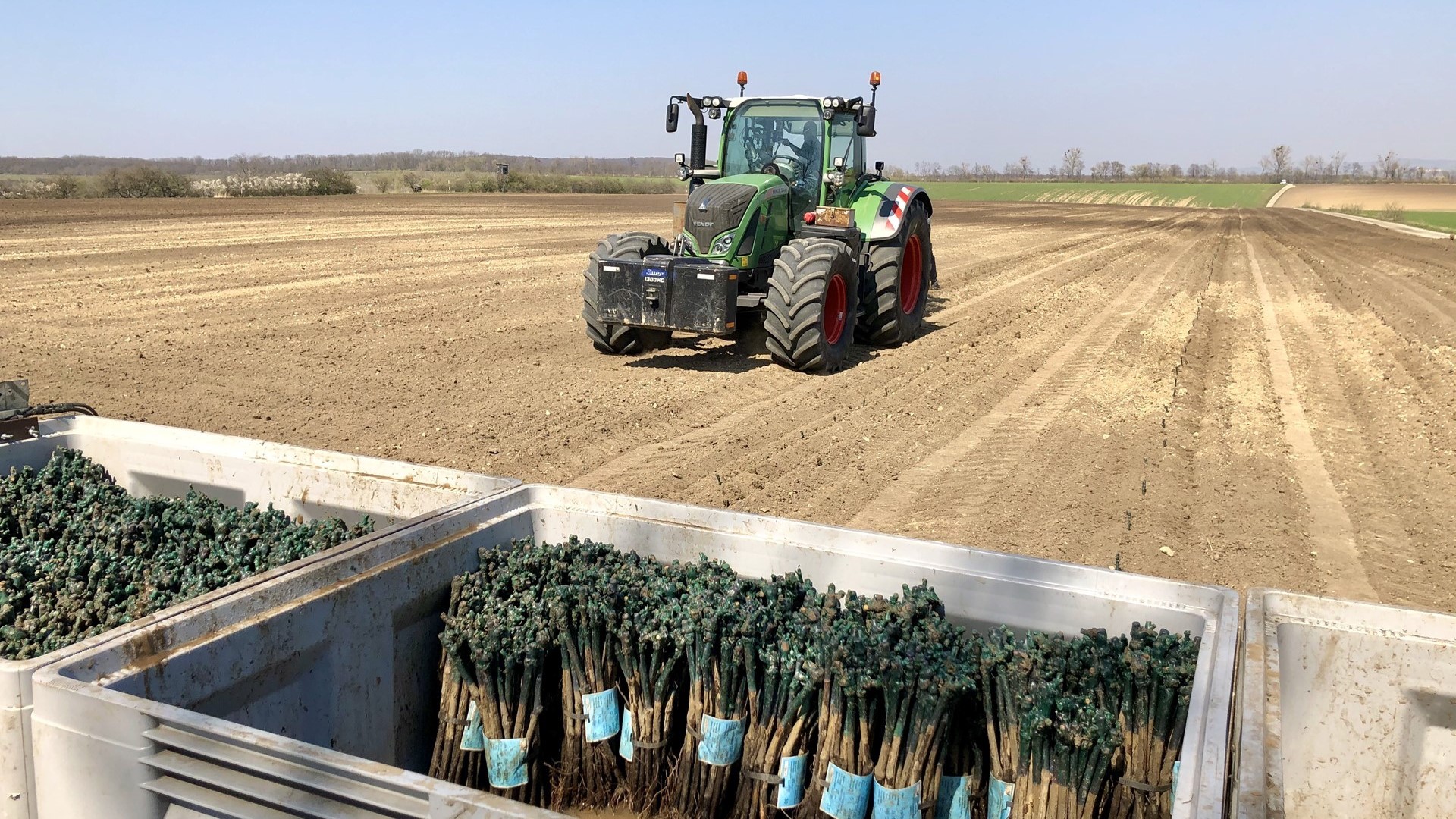
Velké Bílovice, 12 April 2023 – The planting of vineyards has begun in Moravia. BOHEMIA SEKT, one of the most important grapevine growers in the country, has this year opted for resilient PIWI varieties, and has taken the opportunity to launch a trial of collective plant immunity.
Interspecific, resistant or PIWI are synonyms for specially bred grapevine varieties that are more resistant to frost and diseases such as powdery mildew, downy mildew and grey mould. Their taste is usually indistinguishable for consumers from that of the classic European varieties (known as Vitis vinifera L.) that have been grown in the Czech Republic for hundreds of years. The most widespread PIWI varieties in the country include Hibernal, Solaris and Johanniter.
This year, BOHEMIA SEKT planted 11 new hectares of these more resilient varieties on its "Nad Nesytem" and "Kotel" vineyard sites in the wine-growing village of Sedlec, in the Mikulov wine sub-region. "We see PIWI varieties as the future not only of our own winemaking but of the entire Czech wine industry. They are a path towards greener vineyards while achieving higher yields, comparable to those of foreign wine regions. Their only drawback for now is that consumers are not yet familiar with them," explains the company's Director, Ondřej Beránek.
Compared with classic varieties, growing PIWI reduces the amount of plant protection products used while maintaining the quality and volume of production. "This reduces the number of machinery passes through the vineyard for protection against fungal diseases – passes that compact the soil and prevent water from soaking in," says Pavel Pavloušek of the Faculty of Horticulture at Mendel University in Brno.
An Experiment with Collective Immunity
With this planting, the winery is also testing a new way of growing grapevines, aiming to find out whether the resistance of PIWI varieties can be transferred to classic European varieties. The new planting therefore alternates a block of PIWI with a block of a common European variety. "With this approach, we want to test whether collective plant immunity will work. The assumption is that the PIWI variety will create a kind of barrier that prevents fungal diseases from spreading to other plants, including classic varieties," explains Libor Výleta, Viticulture Director of the BOHEMIA SEKT Group.
The company planted its first PIWI vines in 2011 in the Bzenec area. "We already have good results from our PIWI vineyard in Bzenec, and over these 12 years our experience with growing them has advanced enormously – we now expect even better results," adds Libor Výleta. The company plans to continue planting PIWI varieties in the years ahead. The future yield will be used mainly for sparkling wine production.